
UDI Ownership Stops at the Manufacturer
MDCG 2026-5 confirms that UDI-DI assignment stays with the legal manufacturer even for distributor-branded devices. Learn how to audit issuing-entity ownership, reconcile EUDAMED data, and fix contracts and change control.
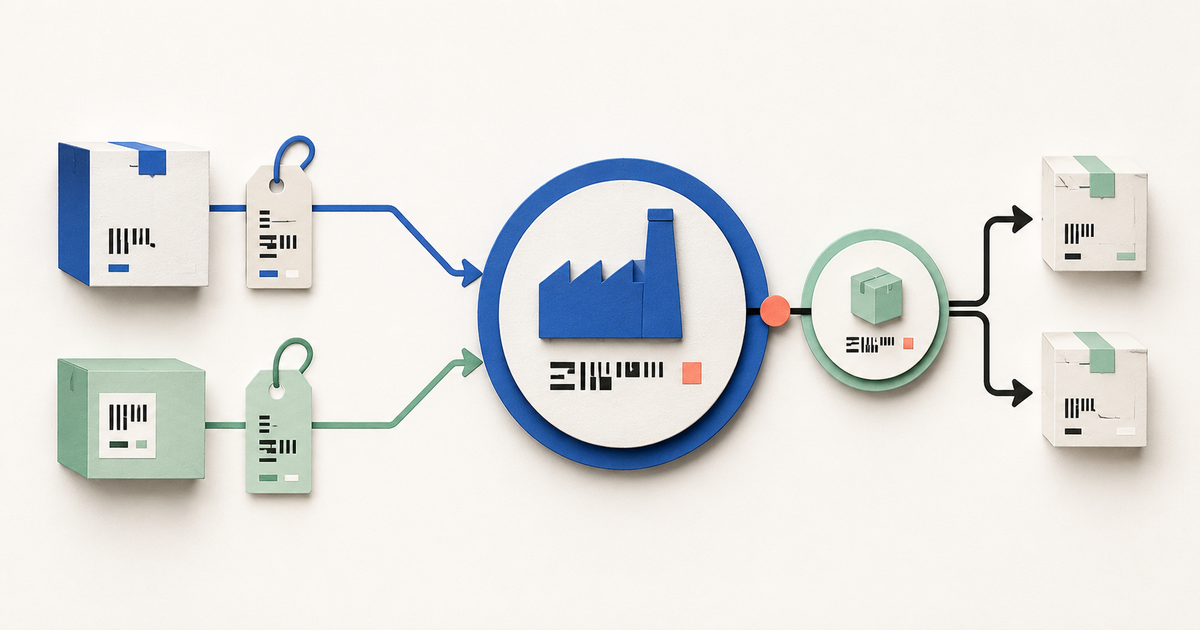
The new position paper addresses a common own-brand practice
Medical device manufacturers often support distributor-branded versions of the same product. The commercial arrangement may be familiar, but the UDI data path can become surprisingly messy. A distributor may request an identifier under its own account, the manufacturer may register multiple trade names, and internal systems may treat each brand as a separate owner.
In July 2026, the Medical Device Coordination Group published MDCG 2026-5 to address that exact situation. The position paper is not legally binding, but it presents the MDCG’s common understanding of how the MDR and IVDR UDI provisions should be applied.
Its conclusion is direct: a device sold under two trade names may appropriately have two UDI-DIs, but the assignment must be made solely by the manufacturer. A distributor or another third party may carry out practical activities on the manufacturer’s behalf, yet ultimate legal responsibility remains with the manufacturer.
For manufacturers, this is not only a database correction. It is a governance test across contracts, issuing-entity accounts, labeling, EUDAMED, product master data, and change control.
What MDCG 2026-5 says
The position paper anchors its reasoning in MDR and IVDR provisions that make the UDI-DI specific to a manufacturer and device. It also points to Annex VI, which says the manufacturer assigns and maintains unique UDIs and is the actor that may place the UDI on the device or packaging.
The MDCG describes a reported practice in which a distributor marketing a device under its own brand obtains a UDI-DI from an issuing entity, even though the legal manufacturer’s identity remains on the label. That approach can leave some identifiers linked to the manufacturer and others linked to the distributor.
MDCG 2026-5 says the issuing entity should provide and link the codes to the company acting as manufacturer. A third party can interact with the issuing entity under an arrangement, but that does not transfer the assignment or legal responsibility. The manufacturer is also identified as the entity that can register the device in EUDAMED.
The distinction matters because delegated execution and transferred accountability are not the same thing. A service provider can submit data. A distributor can coordinate its trade-name information. Neither becomes the manufacturer merely by doing the administrative work.
Where the data can diverge
The most visible problem is an issuing-entity record tied to the distributor rather than the legal manufacturer. That discrepancy can then propagate into EUDAMED, label artwork, distributor catalogs, ERP records, complaint systems, and recall lists.
Own-brand arrangements can also produce duplicate or orphan identifiers. One organization may recognize two UDI-DIs for two trade names, while another system treats them as unrelated devices. If the product changes, one record may be updated and the other may remain stale. If a field action occurs, the manufacturer may struggle to identify every affected brand, market, and consignee.
The issue becomes more consequential now that the EUDAMED UDI and device module is mandatory. Data quality must support continuing registration, change assessment, complaint traceability, vigilance, and field action execution.
Run a four-part remediation review
Start with the highest-risk distributor-branded products, especially active products in multiple Member States or products with recent design, label, or supplier changes.
1. Review issuing-entity ownership
For every UDI-DI, identify the issuing entity, account holder, requesting party, assigned legal manufacturer, trade name, device model, and current status. Flag codes linked to a distributor or another economic operator when the label identifies a different manufacturer.
Do not create replacement identifiers reflexively. Determine the correct regulatory and issuing-entity path, assess downstream effects, and document the rationale before changing live data.
2. Reconcile EUDAMED and internal master data
Compare the Basic UDI-DI, UDI-DI, legal manufacturer, trade name, device model, risk class, certificate references, and market status across EUDAMED and authoritative internal records. The goal is not merely matching fields. It is confirming that every identifier resolves to the correct accountable manufacturer and controlled product configuration.
The earlier IntelaSolve article on device registration data as a quality system asset provides a broader ownership model. This review applies that model to the manufacturer-distributor boundary clarified by MDCG 2026-5.
3. Inspect labels and market-facing records
Confirm that device and packaging labels use the correct UDI and manufacturer identity. Check electronic labeling, distributor websites, product catalogs, shipping masters, and customer-facing records. A correct database record does not solve a label or distribution mismatch.
4. Update contracts and procedures
Distributor agreements should state who requests codes, whose issuing-entity account is used, who approves the final assignment, who registers the device, and how changes are communicated. The agreement should distinguish an administrative task performed on behalf of the manufacturer from the manufacturer’s retained accountability.
Procedures should also define how distributor trade names enter design and labeling change control, how duplicate records are prevented, and how discontinuation or field action data reach every affected brand.
Put UDI ownership into change control
UDI decisions should not sit in an isolated registration spreadsheet. Add an identifier-impact assessment to changes involving trade names, labels, packaging levels, intended purpose, device models, legal manufacturer information, or distributor arrangements.
The change record should list every affected UDI-DI, EUDAMED record, label, certificate reference, market master, complaint code, and distribution record. Named owners should approve data changes and verify completion across systems. Evidence of the reconciliation belongs with the change, not in a personal email folder.
Manufacturers working across jurisdictions can also use IntelaSolve’s markets overview to frame the broader registration landscape and the EUDAMED data governance article for related EU controls.
Traceability begins with legal accountability
MDCG 2026-5 narrows an ambiguity that could otherwise become a persistent data-quality problem. Different trade names may require distinct identifiers, but the identifiers remain rooted in the manufacturer.
The practical response is a targeted audit, followed by controlled remediation and clearer contracts. When UDI ownership, label identity, EUDAMED registration, and internal master data agree, the traceability chain can do the job it was designed to do.
For a multi-brand device portfolio, request a focused workflow evaluation of one manufacturer-distributor UDI chain from issuing entity through EUDAMED and labeling.