
EU Joint Scientific Consultation Starts Before the Evidence Plan Hardens
By Melita Ball
The next EU joint scientific consultation request period opens September 23, 2026. The hard work is deciding which evidence questions are ready for consultation.
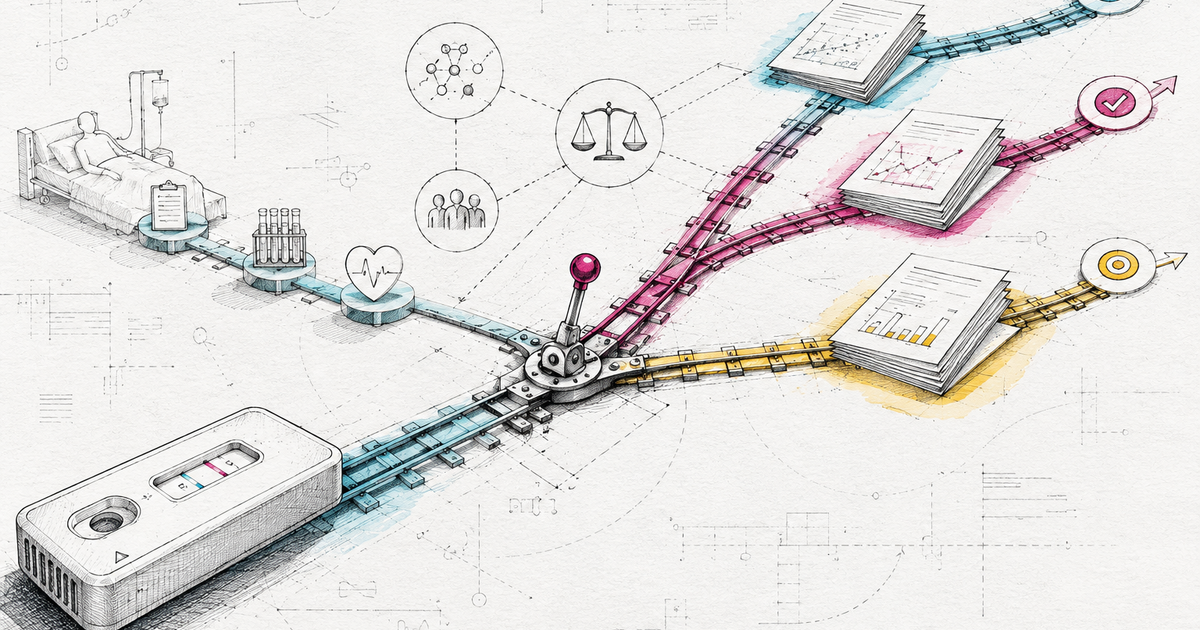
A consultation is most valuable while the team can still change the evidence plan. By the time the protocol, comparator, endpoints, follow-up, and data collection systems are fixed, advice may clarify the problem without giving the developer room to solve it.
That timing question is now immediate for some European medical device and in vitro diagnostic developers. The 2026 EU Joint Scientific Consultation program has one request period remaining: September 23 through October 21. The European Commission published an updated request template for medical devices and IVDs on July 15, 2026.
Joint Scientific Consultations, or JSCs, allow health technology developers to seek advice on the evidence needs for a later Joint Clinical Assessment. The process can also be conducted in parallel with an EU expert-panel consultation for eligible medical devices.
It is not a general regulatory help desk, and selection is not automatic. The preparation has to begin with a product-specific decision about whether the consultation can materially improve the evidence plan.
The next request window is close enough to force decisions
According to the Commission's 2026 schedule, requests submitted during the September 23 to October 21 period lead to later briefing-document deadlines and discussion weeks extending into 2027. The calendar gives teams time to prepare the detailed briefing package after selection, but the request itself still needs a coherent product story and a credible reason for consultation.
Do not wait until September to decide who owns the request. Clinical, regulatory, market access, health economics and outcomes research, biostatistics, product, and commercial leaders may each hold a different view of the evidence problem. Those views need to be reconciled before a short request can be persuasive.
Start with three questions: What decision must the consultation inform? What part of the evidence plan can still change? What would the team do differently depending on the advice?
If the answers are vague, the request is not ready.
What a JSC can and cannot do
A JSC provides scientific consultation on the planning of clinical studies or investigations and the information and evidence needs for a future Joint Clinical Assessment. It can help a developer test the logic of its population, comparator, outcomes, and evidence-generation strategy before those choices become expensive to change.
The consultation does not replace conformity assessment under the MDR or IVDR. It does not provide marketing authorization, reimbursement, or a guarantee that a later assessment will reach a particular conclusion. The advice also does not remove the developer's responsibility to justify the final study design.
That boundary is useful. It keeps the request focused on evidence choices rather than turning it into a broad product presentation.
For medical device teams, the process can be especially valuable when regulatory evidence and HTA evidence are likely to diverge. A study may support safety and performance for conformity assessment while leaving uncertainty about comparative effectiveness, patient-relevant outcomes, or the healthcare-system context needed for HTA.
For IVD teams, the gap may appear between analytical or clinical performance evidence and the downstream patient-management or health-outcome evidence that assessors need to understand value.
Decide whether the product is a credible candidate
The HTA Coordination Group uses selection criteria for JSC requests. The published guidance identifies unmet medical need, first-in-class status, potential impact on patients, public health or healthcare systems, significant cross-border dimension, major Union-wide added value, and Union clinical-research priorities.
A product does not need to satisfy every criterion. The request should show, with discipline, which criteria are relevant and why.
Build a short selection rationale supported by current evidence. Describe the condition and care pathway, the unmet need, the product's intended role, the expected patient or system impact, and the cross-border relevance. Avoid promotional claims. Where evidence is preliminary, label it as such.
Also confirm that the product and development stage fit the procedure. The point is to seek advice early enough to change the study plan, but late enough that the intended purpose, technology, and key evidence questions are stable enough for a useful discussion.
Build questions around decisions, not topics
"Please comment on our clinical strategy" is not a consultation question. It is a request for the reviewers to find the decision for you.
A strong question identifies the proposed approach, the alternative considered, the evidence supporting the choice, and the specific point on which advice is needed.
Population and comparator
Define the intended patient population, relevant subgroups, place in the care pathway, and proposed comparator. Explain why the comparator reflects current practice across the target Member States. If practice varies, ask how the study or analysis should handle that variation.
For an IVD, the comparator question may include both the testing strategy and the clinical-management pathway that follows the result. A technically strong comparator can still be weak for HTA if it does not represent the real decision being made in care.
Outcomes and follow-up
Separate device performance from patient-relevant and system-relevant outcomes. Identify which outcomes are primary, how they will be measured, when they will be measured, and why the follow-up duration is sufficient.
If the product's effect depends on sustained use, workflow adoption, or clinician response, include those dependencies. An outcome measured under tightly controlled study conditions may not answer how the technology performs in the intended care pathway.
Parallel expert-panel consultation
For eligible medical devices, a parallel HTACG and expert-panel JSC may help align HTA evidence questions with clinical-development questions relevant to the device framework. Decide whether the overlap is real. Parallel does not mean identical. The briefing package should make clear which questions belong to which body and where the answers need to connect.
Create one evidence spine across functions
The request, briefing document, study plan, risk file, intended-purpose statement, regulatory strategy, and future HTA dossier should describe the same product and evidence logic.
Create an evidence decision register. For every consultation question, record the owner, proposed approach, alternatives, supporting evidence, assumptions, decision date, and downstream documents affected. After the consultation, record how the advice changed the plan or why the team chose a different justified approach.
This is where fragmented tools create avoidable risk. Market access may maintain the comparator analysis in one workspace, clinical may hold endpoints in the protocol, regulatory may use a different intended-purpose statement, and quality may not see the impact of the advice on controlled documents.
A connected compliance infrastructure gives the team one traceable chain from product definition and risk through clinical evidence, regulatory strategy, market access questions, and post-market commitments. IntelaSolve's global market coverage model and medical-device lifecycle platform reflect that cross-functional operating model.
For diagnostics teams, the earlier article on IVDR clinical evidence as a living system is a useful companion. The JSC helps shape the evidence plan; the lifecycle system keeps that evidence current after the consultation.
The consultation is early, but the preparation must be mature
The September request window is not a reason to rush a weak application. It is a reason to make the internal evidence decisions now.
Choose the questions that could change the study. Confirm the product story across regulatory and HTA teams. Test the selection rationale against the published criteria. Then build the request from the decisions the organization is genuinely prepared to act on.
The best result is not a completed consultation. It is an evidence plan that becomes more useful because the right questions were asked while the team still had room to respond.
Frequently asked questions
- What is an EU Joint Scientific Consultation for a medical device or IVD?
- It is a voluntary EU process through which a health technology developer can seek scientific advice on evidence planning for a later Joint Clinical Assessment. It does not replace MDR or IVDR conformity assessment or guarantee an HTA outcome.
- When is the remaining 2026 request period?
- The European Commission lists September 23 through October 21, 2026 as the remaining 2026 request period. Developers should confirm the current schedule on the Commission site before submitting.
- What makes a useful JSC question?
- A useful question identifies the proposed approach, the alternative considered, the supporting evidence, and the specific decision that could change based on the consultation.
Sources
Topics
- IVD
- Health Technology Assessment
- Clinical Evidence
- EU Market Access