
Electronic Instructions Need the Same Discipline as the Device
Electronic instructions for use are a controlled labeling output. Learn how to govern eIFU version linkage, availability and fallback, language and accessibility, paper-copy requests, and archival retrieval.
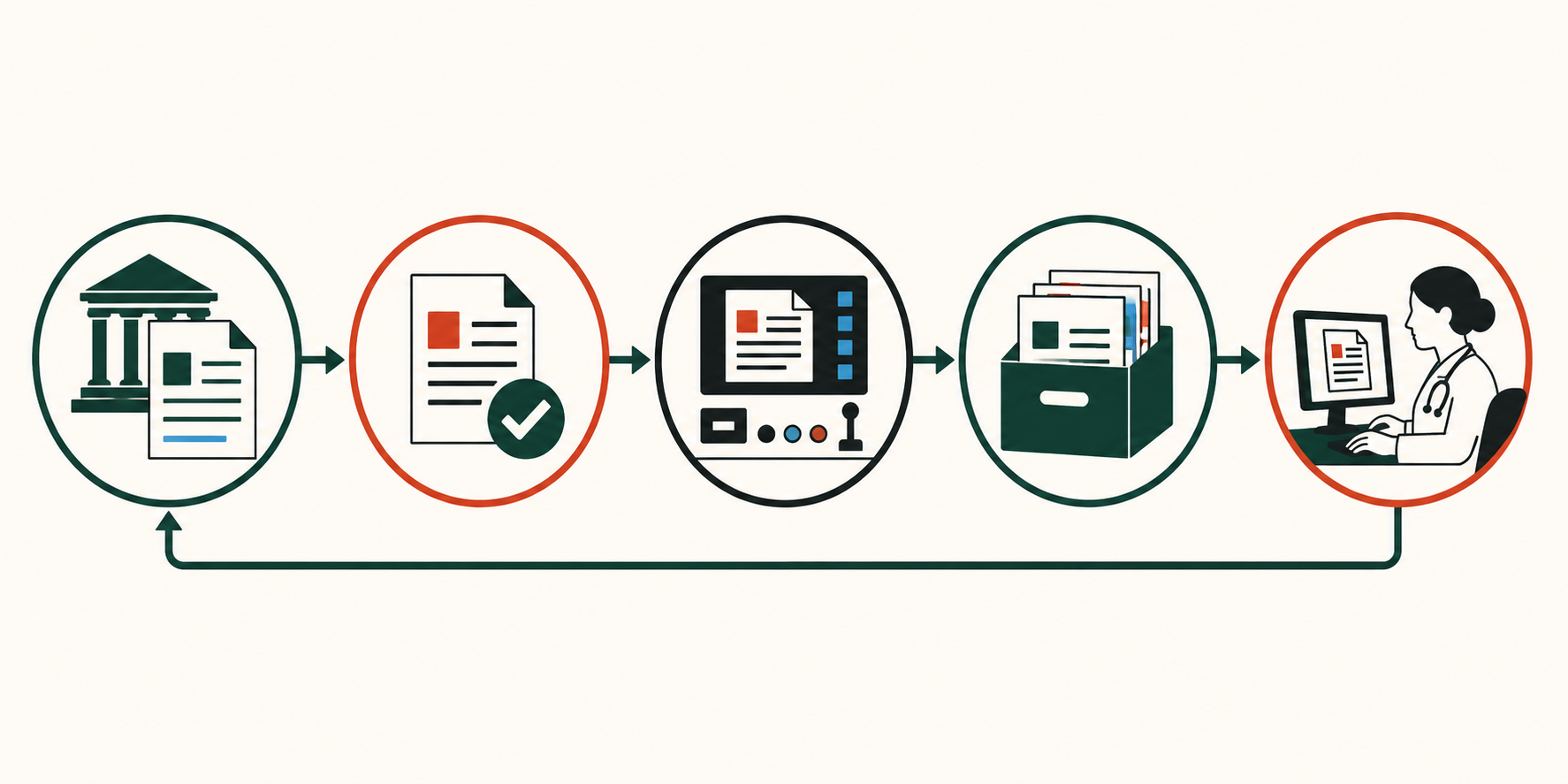
Electronic labeling is a controlled output, not a website
Electronic instructions for use can reduce waste, speed updates, and improve access. They also move a controlled labeling output onto infrastructure that most quality systems were not designed to govern. Availability, version control, language coverage, accessibility, and archival retention all become quality obligations.
The risk is not that a manufacturer publishes an eIFU. It is that the published content, the approved content, and the content associated with the distributed device drift apart. When a clinician retrieves instructions for a device delivered two years ago, the system must give them the version that applies to that device.
Define the governance model before the platform
Start with the questions a reviewer or a user will ask. Which document version applies to which device version and market? How does a user find it? What happens when the website is unavailable? How does a user request a paper copy, and how quickly is it provided? How long is each superseded version retained and retrievable?
Version and device linkage
Every published instruction set should be traceable to an approved labeling record, the device models and configurations it covers, the applicable markets and languages, the effective date, and the superseded version. That linkage is what allows the organization to answer a field question without guesswork.
Publication should be a controlled release step with its own approval, not a content-management convenience. The person who approves the labeling change and the person who publishes it should be working from the same record.
Availability and fallback
Treat availability as a monitored requirement. Define expected uptime, monitoring, incident response, and the fallback path when the platform is unreachable. Users need a documented route to obtain instructions by other means, and the organization should be able to show that the route works.
Paper-copy requests deserve a measured process: how requests are received, who fulfills them, the committed timeframe, and how fulfillment is recorded. A commitment stated in labeling and unmeasured in operations is a finding waiting to happen.
Access, language, and accessibility
Confirm that users can locate the correct document without special tools or accounts, that language coverage matches distribution, and that translations are controlled with the same rigor as the source document. Accessibility considerations, file formats, and device compatibility should be assessed for the actual professional-use environment rather than for an ideal one.
Keep archival retrieval honest
Superseded versions must remain retrievable for the defined period. Test that retrieval periodically with a real query: select a device and a past date, and confirm that the system returns the version that was effective then. Archive integrity is easy to assume and easy to lose during a platform migration.
Change history should show what changed, why, who approved it, and when the new version became effective. That history supports complaint investigation, usability analysis, and post-market review.
Verify the whole path once per year
Run a single end-to-end check: locate the labeling approval record, trace it to the published document, retrieve it as an external user would, request a paper copy through the stated channel, confirm the delivery time, and pull the superseded version from the archive. Record what the exercise found and assign owners to the gaps.
The discipline is the same as any other controlled output. The medium changed; the obligation to prove control did not. Manufacturers connecting labeling to the rest of the lifecycle can align this with device quality-system workflows and existing corrective action practice.